The Water Rate Setting Study Data Portal
General info
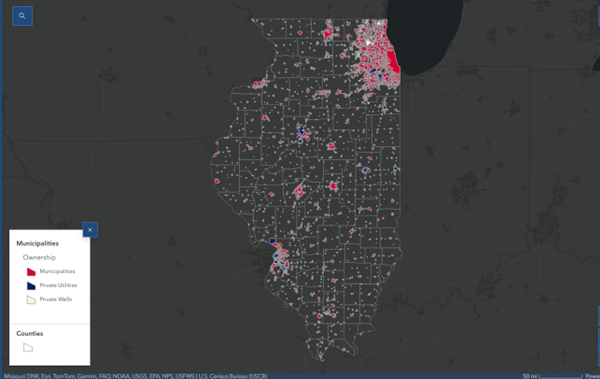
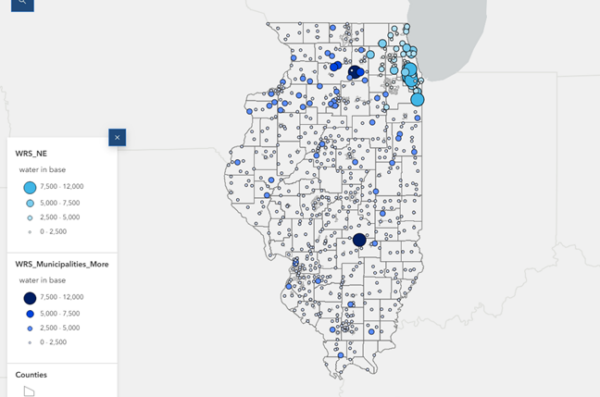
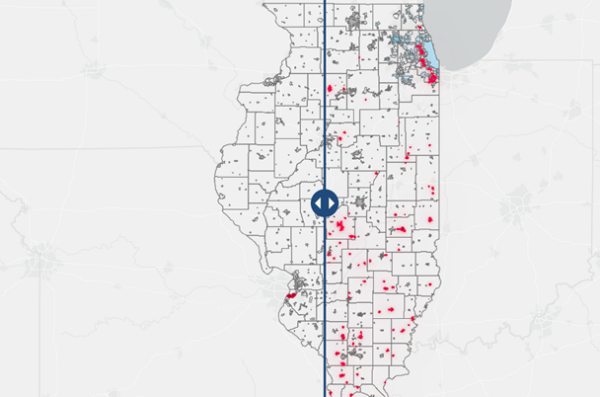
In 2021, the Illinois General Assembly tasked the GFRC to examine the components of water bills, how municipalities and water districts establish rates, what factors influence rate adjustments as well as the extent to which State or local policies drive cost increases or variations in rate-settings, the definition of affordability throughout the State and any variances to that definition, whether equity and affordability are integrated into the rate-setting process, how rate-setting varies between economically disadvantaged and economically advantaged communities, and opportunities for increased intergovernmental coordination for setting equitable water rates. Below, you will find interactive maps illustrating data collected by the GFRC researchers.
Select a Topic to Learn More


Data Downloads
In 2021, the Illinois General Assembly commissioned the GFRC to conduct a “Water Rate Setting Study.” This three-year project produced a series of deliverables, including reports, datasets, presentations, and other dissemination products. The first report, published in June 2023, focuses on Northeastern Illinois, or the Lake Michigan Service Area (LMSA). It uses information from publicly available data sources such as CMAP’s data hub, EPA’s SDWIS, and the Illinois State Water Survey’s Statewide Municipal Water Use and Water Purchase dataset, among others.
To download the consolidated dataset and data dictionary produced and used by the GFRC to analyze water rate setting in Northeastern Illinois (or the LMSA), visit Harvard’s Dataverse.
The second report, published in December 2024, provides a comprehensive review of rate setting in Northwestern, Central, and Southern Illinois (NCSI). While this report also relied on similar publicly available data as the first report, it also required the construction of an original dataset of water rates directly collected from communities between July 2023 and March 2024. Through this effort, which included contacting 859 municipalities where residents receive drinking water from municipal systems or water commissions and districts, the GFRC researchers were able to collect water rates from 595 or 70% of municipalities. At the time of the report’s release, this water rate collection initiative was the single largest in Illinois and only the third effort among researchers nationwide to collect water rate data outside of urban areas.
To download the datasets and data dictionary produced and used by the GFRC to analyze water rate setting in Northwestern, Central, and Southern Illinois (or the NCSI), visit Harvard’s Dataverse.